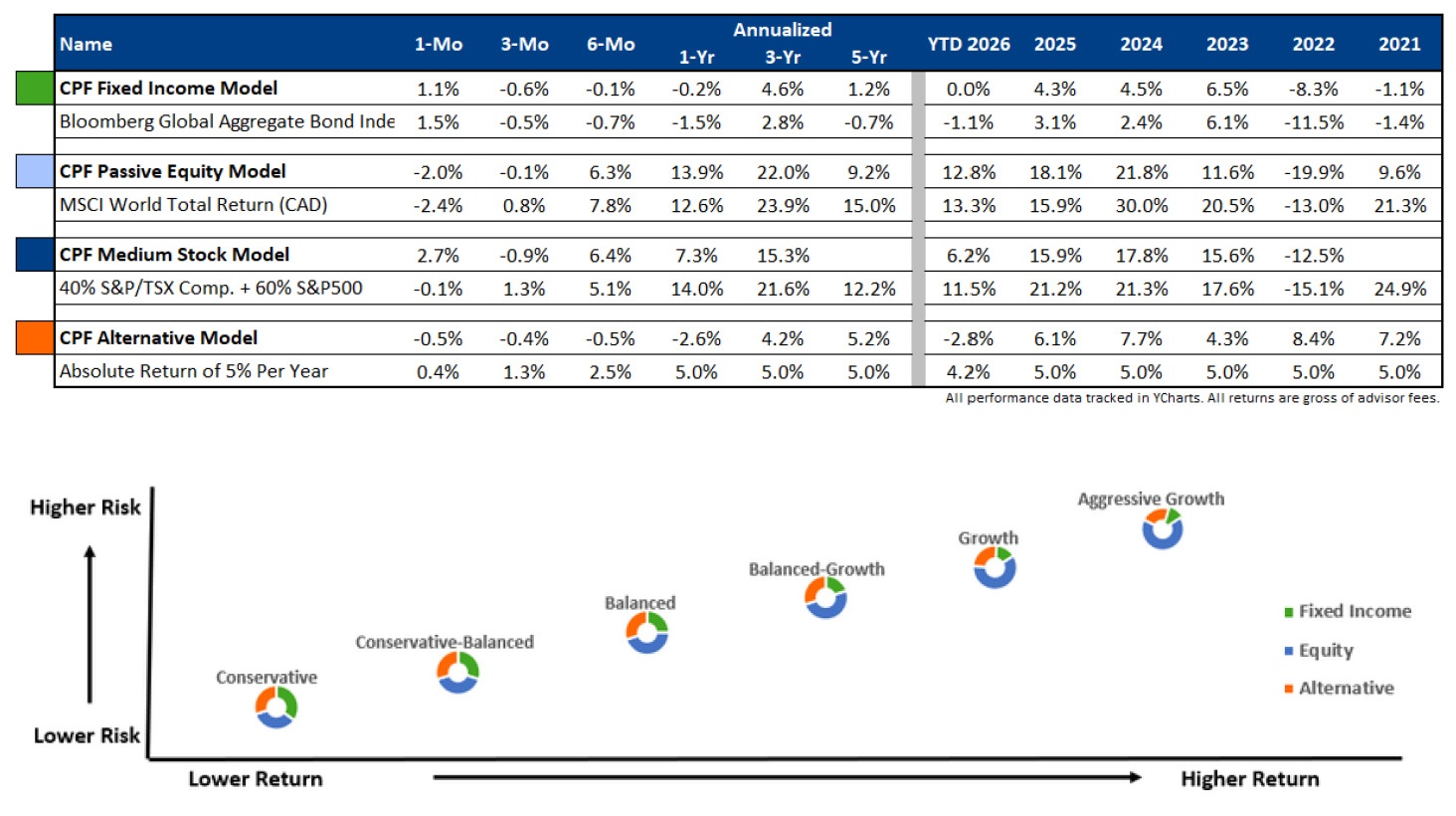
Portfolio Highlights
Spotify Technology S.A. (SPOT) surged 21.76% for the month as the company reported accelerating premium subscriber growth and expanding gross margins driven by recent price increases and improved ad-supported monetization. Investors reacted highly favourably to the platform’s expanding foray into high-margin audiobooks and aggressive cost-containment measures that have structurally improved corporate profitability. The market is increasingly rewarding the company’s transition from raw user acquisition to sustained free cash flow generation, triggering a substantial multiple expansion.
Canadian Natural Resources Limited (CNQ) rallied 17.17% this month, lifted by a broad advance in oil-linked equities as global crude benchmarks moved higher and Western Canadian Select differentials continued to narrow. The company’s exceptional operational reliability and steadfast commitment to shareholder returns, highlighted by a recently distributed quarterly dividend, attracted significant institutional capital. Furthermore, investors remain highly confident in the long-life, low-decline nature of its core oil sands assets to act as a premier free cash flow generator during periods of elevated energy prices.
Alphabet Inc. (GOOG) experienced a severe 18.36% selloff following its third-quarter results as investors grew increasingly concerned over slowing Search advertising growth and weaker monetization of its new AI-powered search features. Despite robust revenue expansion in Google Cloud, market sentiment soured significantly due to mounting AI infrastructure capital expenditures and negative free cash flow generation. Consequently, the stock suffered immediate multiple compression as institutional investors questioned whether the massive artificial intelligence investments could generate sufficient near-term returns to offset pressure on the core digital advertising business.
Cisco Systems Inc. (CSCO) posted a modest 2.75% decline as investors engaged in tactical profit-taking following a massive run earlier in the year, rotating capital out of the mature networking equipment supplier. Despite robust hyperscaler orders for new AI infrastructure, near-term sentiment was pressured by broader industry concerns regarding rising memory costs and subsequent margin compression on core hardware sales. The market also remains cautious about tight macroeconomic IT spending budgets, leading to a slight multiple contraction as investors await clearer timelines for enterprise AI network upgrades.
Data sourced from YCharts.
All data is for the reported month and in local currency.
Macro Watch
In October 2026, the International Monetary Fund projected global growth to slow to 3.1% while forecasting a notable rise in global headline inflation to 4.7%. In response to this sticky inflation, major central banks pivoted back into a hawkish stance, pushing global borrowing costs higher and sending the U.S. 10-year Treasury yield above the 5% threshold.
This aggressive monetary environment triggered a violent equity market reset at the end of the month. A brutal, tech-led sell-off wiped roughly $2 trillion from the Nasdaq-100, marking Wall Street’s worst single day since the summer. The macroeconomic divide that previously favoured technology stocks fractured as staggering AI infrastructure costs (resulting in negative free cash flows for hyperscalers) sparked immediate fears of an AI bubble. This multiple compression rapidly spread across the global semiconductor supply chain, prompting institutional capital to rotate toward defensive assets.
Compounding the equity market volatility, escalating geopolitical conflicts pushed Brent crude to a five-month high. Extended maritime transit times and elevated security premiums continue to stall global disinflation, forcing multinational firms to maintain costly localized supply buffers and adding structural friction to international trade.
Despite this turbulent international backdrop, the U.S. economy extended its outperformance against the U.K. and the Eurozone. While the tech sector absorbed a severe valuation correction, aggressive capital deployment into domestic manufacturing has established a solid economic floor. Furthermore, the strategic advantage of domestic energy independence continues to shield American industrial producers from European-style utility shocks, keeping U.S. consumer spending resilient heading into the final months of the year.
Data sourced from YCharts.
All data is for the reported month and in local currency.
Portfolio Returns
October 2026