Portfolio Highlights
Microsoft (MSFT) led the portfolio with a monthly return of 30.08%, driven by strong Q4 fiscal 2026 results that showcased a massive 43% growth in Azure and other cloud services. The market reacted highly favorably to intensified demand for AI infrastructure, which is now backed by a US$678 billion commercial backlog and over 30 million paid Copilot seats. This tangible acceleration in AI monetization completely offset investor concerns regarding heavy data center capital expenditures, triggering a major rally in the stock.
Canadian Natural Resources (CNQ.TO) gained 9.15% over the month, benefiting significantly from supportive global crude oil pricing and the continued narrowing of Western Canadian Select heavy oil differentials. The company’s steadfast commitment to returning 100% of free cash flow to shareholders through base dividends and aggressive share repurchases attracted substantial institutional capital. Furthermore, high operational reliability across their long-life oil sands assets reinforced their premium status as a top-tier cash flow generator in the energy sector.
Hydro One (H.TO) fell 10.63% during the month, experiencing a sharp pullback primarily because rising Canadian bond yields pressured the valuations of defensive, yield-oriented utility equities. Income investors rotated out of this heavily regulated stock in favor of higher risk-free returns, causing immediate multiple compression despite the company’s highly predictable revenue streams. Additionally, broader market concerns regarding the intense capital required for grid modernization and potential provincial regulatory friction weighed heavily on near-term sentiment.
Enbridge(ENB) posted a decline of 9.37%, facing intense selling pressure due to the headwind of elevated interest rates, which directly increases debt servicing costs for capital-intensive pipeline operators. The market also continued to price in execution and financial dilution risks stemming from the company’s recent massive acquisitions of US natural gas utilities. Consequently, yield-focused investors demanded a higher risk premium to hold the equity, leading to multiple compression despite the highly contracted nature of its core pipeline network.
All data sourced from FACTSET and Bloomberg L.P.
All data is for the reported month and in local currency.
Macro Watch
In August, 2026 global macroeconomic attention centered on the annual Jackson Hole Economic Symposium, where central bank officials acknowledged that the final stretch of disinflation remains stubbornly difficult to cross. With global growth expectations holding near 3.0%, the structural economic divide highlighted earlier in the year has only widened. Economies deeply integrated into advanced semiconductor manufacturing and AI infrastructure continue to see upward growth revisions, whereas traditional manufacturing regions face severe margin compression. Policymakers are now signaling that a prolonged period of elevated interest rates is the new baseline, as they attempt to balance booming technological investment against sticky price pressures.
The geopolitical strains that disrupted energy markets in July carried directly into August, solidifying a higher risk premium across global supply chains. With the Strait of Hormuz remaining highly volatile, commercial shipping networks have increasingly formalized costly rerouting strategies, which has persistently elevated baseline freight and logistics expenses. This sustained friction in the transport of oil, natural gas, and fertilizers has begun to bleed into broader agricultural and producer price indices. Consequently, these supply-side shocks are becoming deeply embedded in the global inflation trajectory, keeping financial markets highly sensitive to any further regional escalations.
Against this backdrop of global commodity friction, the U.S. economy continues to diverge sharply from the Eurozone and the UK. By demonstrating exceptional durability. Sustained and massive capital expenditures in artificial intelligence and cloud infrastructure have created a powerful multiplier effect, effectively shielding domestic business activity from cooling worldwide. Furthermore, because the U.S. operates as a net energy exporter, its domestic markets have been largely insulated from the severe energy price spikes currently stifling European industrial output. As a result, U.S. consumer sentiment remains robust, cementing the domestic economy as the primary engine of global resilience despite elevated borrowing costs
All data sourced from FACTSET and SIACharts.
All data is for the reported month and in local currency.
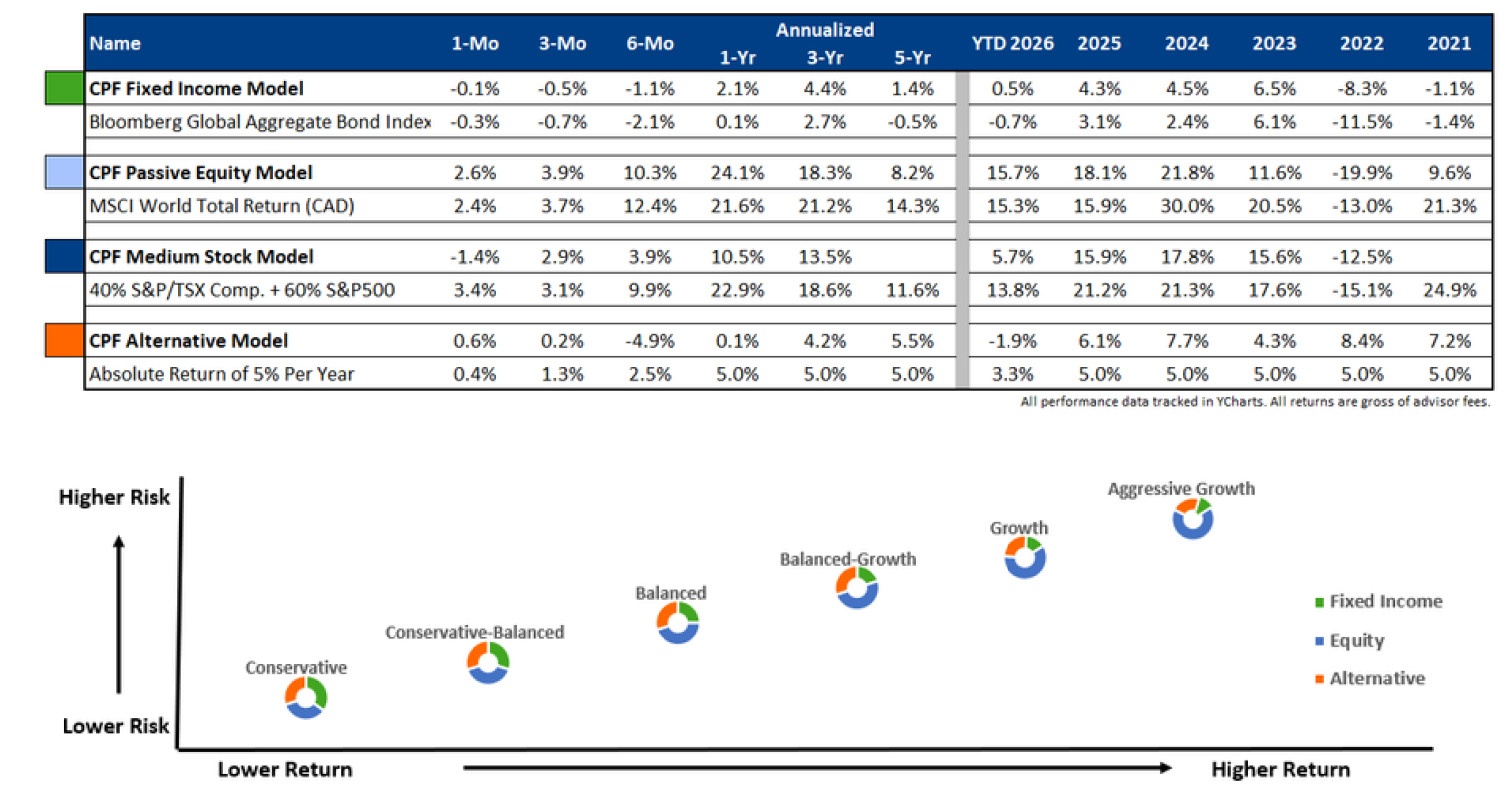
Portfolio Returns
August 2026