Portfolio Highlights
Deere & Company (DE) surged 15.58% after delivering a strong fiscal Q2 earnings beat, fueled by a top-line performance that exceeded revenue forecasts by roughly 16%. The results helped alleviate investor concerns regarding softness in the company’s core large agricultural equipment market. By maintaining its full-year net income guidance despite broader macroeconomic volatility, Deere reinforced confidence in its operational resilience and long-term earnings stability.
Alimentation Couche-Tard (ATD.TO) advanced 17.47% following robust fourth-quarter and full-year fiscal 2026 results that handily beat analyst expectations. A notable 22% increase in full-year net income and expanding profit margins highlighted the company’s ability to drive higher revenues. The results underscored Couche-Tard’s defensive strength and its capacity to consistently compound earnings despite an unpredictable global consumer backdrop.
Microsoft (MSFT) declined 18.37% as investors grew increasingly impatient with the massive capital expenditures required to fund its artificial intelligence buildout. While the company’s core cloud and software businesses continue to deliver strong top-line growth, mounting AI infrastructure costs have sparked concerns regarding near-term profitability and free cash flow generation. The market is increasingly demanding clear visibility into AI monetization to justify the escalating level of investment.
Apple (AAPL) fell 9.93% after the highly anticipated unveiling of its new “Apple Intelligence” platform and revamped Siri capabilities failed to impress the market. Investors viewed the new features as largely incremental, heightening concerns about Apple’s competitive positioning relative to peers who have deployed more advanced generative AI tools. Furthermore, rising memory component costs fueled by broader AI demand have added pressure, introducing fresh uncertainty surrounding the company’s near-term profitability and hardware margins.
All data sourced from FACTSET and Bloomberg L.P.
All data is for the reported month and in local currency.
Macro Watch
During June, the global macroeconomic backdrop was increasingly defined by stagflationary impulses stemming from the ongoing Middle East conflict and persistent energy price shocks. As oil prices remained volatile and core inflation measures ticked upward, the narrative of a smooth disinflationary path continued to fracture. These enduring supply-side pressures forced markets to rapidly reprice the probabilities of sustained inflation, heightening concerns over weaker real income growth and elevated market volatility.
The re-acceleration of inflationary pressures prompted a dramatic hawkish shift in central bank expectations, effectively taking 2026 rate cuts entirely off the table. At its June meeting, the U.S. Federal Reserve, led by new Chair Kevin Warsh, held its policy rate steady but delivered a resolute commitment to price stability, with median projections now signaling the potential for rate hikes later in the year. Consequently, fixed-income markets saw long-end yields climb to multi-decade highs, reflecting a growing consensus that monetary policy will remain restrictive for an extended period.
In Canada, the economic outlook deteriorated further in June as forecasters downgraded 2026 GDP growth projections to roughly 1% amidst a prolonged period of stagnation. Enduring trade frictions—most notably ongoing U.S. tariff pressures—and heightened uncertainty severely constrained business investment and non-energy exports. With the Bank of Canada holding rates steady, the combination of energy-driven inflation spikes and squeezed real household incomes left policymakers navigating an increasingly narrow path to stimulate sluggish growth without exacerbating price pressures.
All data sourced from FACTSET and SIACharts.
All data is for the reported month and in local currency.
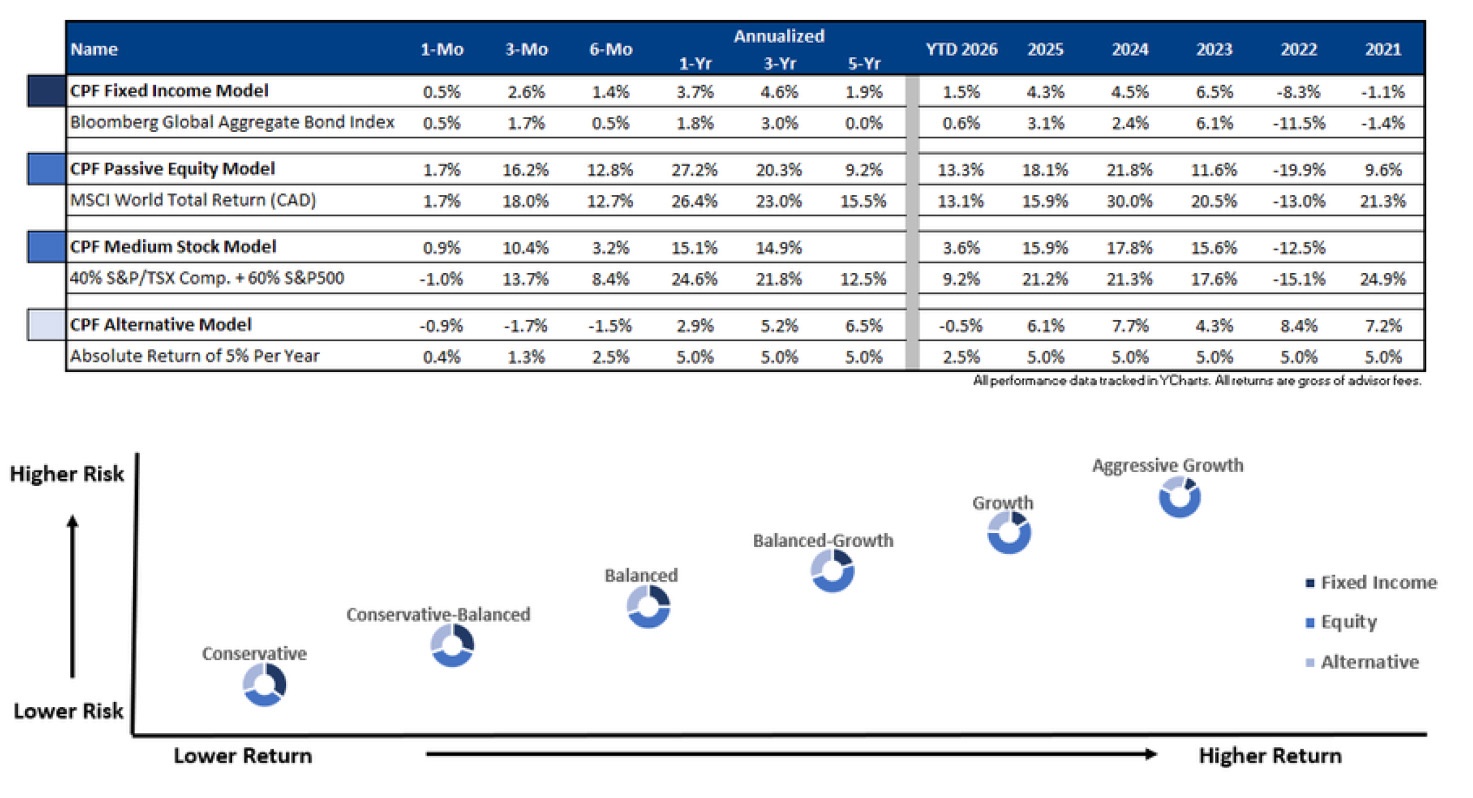
Portfolio Returns
June 2026